

From Gaza to Ukraine, externally designed peace plans are replacing negotiation with compliance, reshaping sovereignty and sidelining the people most affected, writesTatiana Svorou.
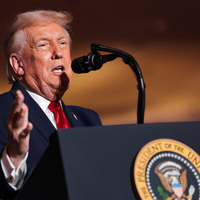
WITH ITSnear-unanimous voteon U.S. PresidentTrumps Gaza plan, the UN Security Council has cemented a transition built over Palestinian objections and outside their participation.
The framework elevates foreign oversight, empowers an international force and conditions Palestinian sovereignty on compliance with external benchmarks, deepening a legitimacy crisis before the new system even begins.
The UN Security Councilsapprovalof Trumps Gaza plan on 17 November 2025 marked the consolidation of a political process built almost entirely without Palestinian participation. The resolution passed effortlessly with 13 votes in favour, none against and two abstentions, with no state willing to challenge it through a veto or even sustained debate.The plans centrepiece, the so-called Board of Peace, will hold sweeping executive authority over Gazas governance, reconstruction and security architecture.
Gaza-based Palestinian factions had no role in determining how it would function, and the plan was negotiated primarily between the U.S., Israel and regional states, with thePalestinian Authorityonly consulted at the margins.Nevertheless, the only place assigned to them (a technocratic committee) limits their involvement to administrative tasks and excludes them from shaping core political decisions.
UN endorses Trump-backed Gaza plan, drawing condemnation from PalestiniansPalestinians and human rights advocates have slammed the UNs new Gaza resolution as a neo-colonial power grab that rewards Israeli aggression and whitewashes decades of occupation.
This dynamic becomes even more obvious when noting that Hamas rejected the plans call for a foreign stabilisation force to operate inside the Strip, insisting that such a deployment would undermine Palestinian rights and agency. Hamas stated that the UNs approval for bringing in an international force strips it of its neutrality and turns it into a party to the conflict in favour of the occupation, while the broader coalition of Gaza factionsdescribedthe proposal as a form of imposed guardianship that sidelines Palestinians from directing their own future.
Their objection, however, did not affect the final resolution. TheInternational Stabilisation Force, endowed with authority to police borders, disarm armed groups and enforce internal security directives, will bedeployedwithout democratic endorsement from the population it will govern.
At the same time, the plans structure does not merely sideline Palestinians as it reshapes fundamental legal principles. By conditioning Palestinian sovereignty and political recognition on a series of external benchmarks, institutional reforms, demilitarisation and security compliance, theresolutionreframes self-determination as something Palestinians must earn, rather than a right guaranteed under international law.
Even Israeli withdrawal is made contingent on Palestinian performance, reversing the established legal reality that ending occupation is an obligation of the occupying power and not a privilege granted based on the conduct of the occupied.
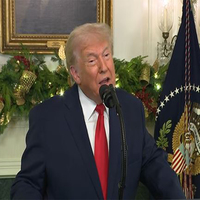
Nevertheless, this framework reflects a broader political doctrine that has defined Trumps approach to conflict termination. In Gaza, just as in hisproposalson 19 November regarding Ukraine, Trumps approach delivers a pre-written political blueprint to those living through the conflict and then attempts to force acceptance of terms shaped by actors with far greater power. The people most affected are confronted not with negotiation, but with a finished plan crafted around the interests of others.
And along these lines, what should be a negotiation becomes a presentation, and what should require consent is treated as something to be expected. The result is a familiar pattern where the people who will live with the consequences are being spoken to rather than being spoken with, reduced to an audience instead of being recognised as political actors with the right to shape their own future.
Trump's peace plan might split two states into threeGaza, the West Bank and Israel Trumps peace plan is more likely to divide than unite.
Therefore, such an arrangement inevitably produces a profound legitimacy deficit. A governance model imposed from outside cannot expect trust from the people who endured siege, bombardment and forced displacement. And here, the implications extend far beyond Gaza. By endorsing a model in which sovereignty becomes conditional and external oversight becomes normalised, the Security Council has created a precedent for how powerful states may handle contested or occupied territories in the future.
If Palestinian rights can be treated as provisional, then the principle of self-determination becomes negotiable everywhere. The resolution thus weakens not only Palestinian rights, but the integrity of the entire international legal order that is supposed to protect them.
At its core, the Gaza plan treats Palestinians as an administrative problem rather than a political people. Outsiders design the institutions, outsiders define the standards, outsiders decide when Palestinians will finally be allowed to exercise rights already recognised in international law. Therefore, such an arrangement inevitably produces a profound legitimacy deficit.
Under international law, particularly the principles of self-determination, sovereign equality and the prohibition of imposed governance structures, any model of administration must derive its authority from the people it governs. Moreover, a governance system engineered externally without genuine participation or consent from a population that has endured siege, bombardment and forced displacement, cannot satisfy the requirements of popular sovereignty embedded in Article 1 of theUN Charter(which affirms the principle of self-determination), and Article 1 of theInternational Covenant on Civil and Political Rightswhich reiterates that all peoples have the right to freely determine their political status.
As long as Palestinians are denied the right to shape their own future, every plan imposed from outside will repeat a pattern Palestinians know too well- promises of stability masking yet another layer of domination. If Palestinians are not recognised as political agents in their own right, what chance does any foreign-designed framework have of delivering anything beyond another managed status quo?
Tatiana Svorouis a human rights and humanitarian advocacy specialist.
Related Articles
- UN endorses Trump-backed Gaza plan, drawing condemnation from Palestinians
- Unseeing genocide: How the West lost Its moral compass in Gaza
- The Union remembers its dead
- Weaponising words: How propaganda shapes Gaza narratives
- Trump's peace plan might split two states into three